
Everything you need to know about the new Apple iPhone Duo
For years, it’s been a case of when will Apple enter the foldable market. While competitors raced ahead with new designs, Apple famously held out, refusing to bend its rigid design philosophy until it could get the formula right.
Now, after much speculation, the wait is finally over. Apple has officially staked its claim in the foldable category with its long-awaited iPhone Duo.
Following a first look at Apple’s headquarters in Cupertino, California, tech journalists are weighing in on whether this premium device can really revolutionise the folding phone landscape or if its staggering price tag makes it a luxury too far. Here is everything you need to know about the new iPhone Duo, split into the most pressing questions.
What exactly is the iPhone Duo and what does it look like?
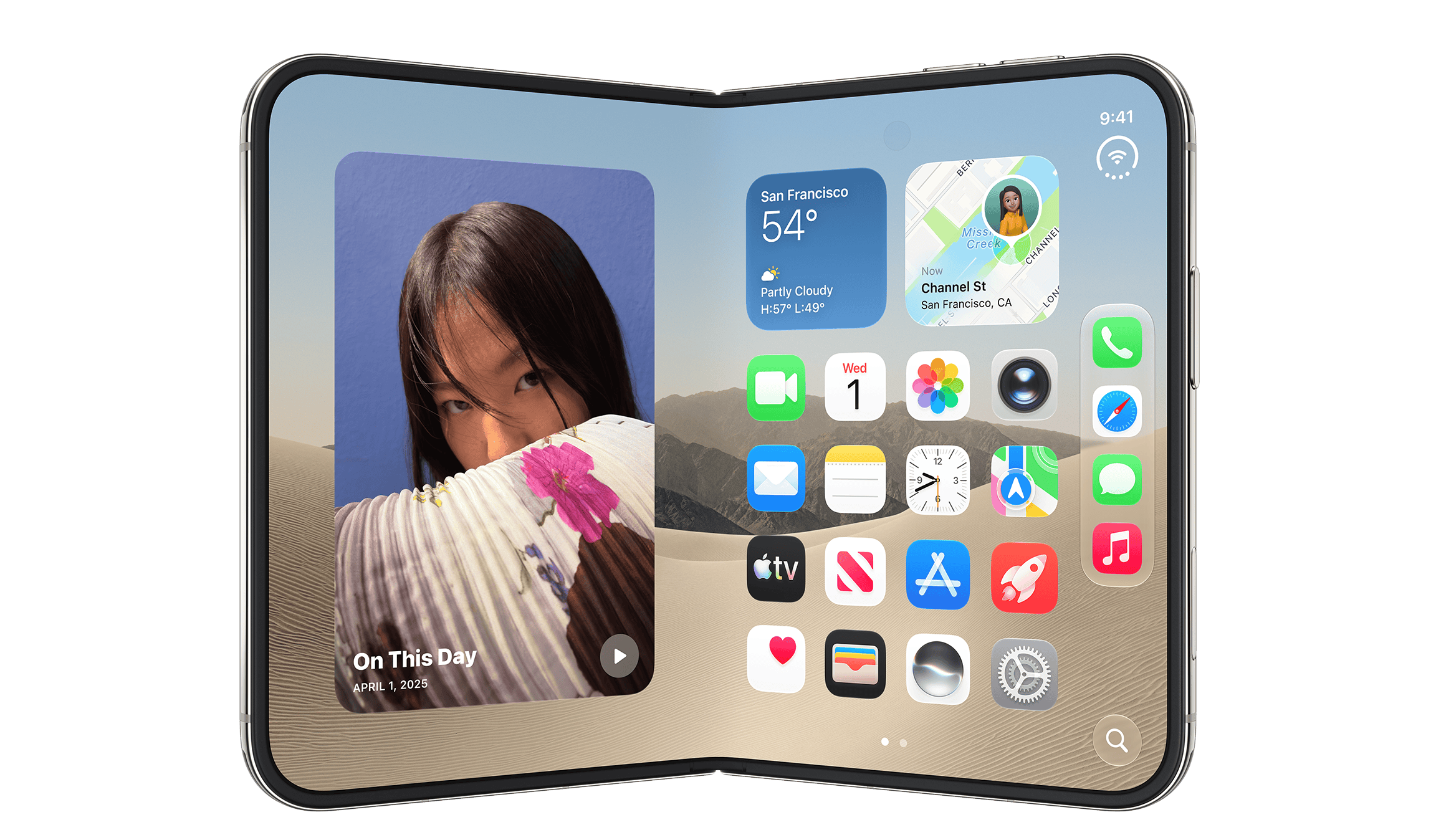
Similar in size to a British passport when folded, the iPhone Duo is Apple’s first-ever folding smartphone. It opens like a miniature book to reveal a large, vibrant 7.6-inch inner screen. When closed, it is shorter and wider than a traditional iPhone, making it easier to use one-handed. When fully open, it closely resembles a small iPad.
How does it vary from the competition?
Apple has clearly studied the missteps of its rivals over the last decade and addressed several common frustrations plaguing folding mobiles:
-
The display finish: Unlike many folding phones which feature a cheap-feeling plastic layer with a prominent middle crease, the iPhone Duo utilises a matte finish on its internal display. This significantly minimises reflections, eliminates fingerprints, hides the crease so it is barely noticeable and avoids an awkward plastic lip at the edge.
-
Seamless software transition: Opening apps like Netflix on the front screen and then unfolding the device instantly scales the content to the inner screen. Bending the phone into a right angle automatically shifts playback controls to the bottom half and video to the top.
-
Durability: The Duo features an IP68 water and dust resistance rating – a robust standard previously only offered by the Google Pixel Pro Fold, making it resistant to sand and water at the beach.
-
Apple Pencil Support: Both displays support the Apple Pencil for on-the-go note-taking and drawing, a feature competitors such as Samsung have recently dropped.
What are the positives of the iPhone Duo?
Beyond its impressive display finish and seamless multitasking, the hardware design is remarkably slim at just 5.2mm when open. It feels substantial and well-weighted rather than flimsy. Clever camera tricks like “Kids Cue” (which uses Snoopy on the outer screen to capture children’s attention for photos) and “Smart Take” (using AI to capture up to 20 photos when subjects pose) add a bit of fun. Furthermore, its software is highly polished and intuitive.
Are there any negatives?
Yes, the device comes with notable compromises:
-
Camera Limitations: Despite its high price, the Duo lacks a dedicated zoom lens, featuring only two rear cameras (a main camera and a 48-megapixel ultrawide sensor), falling short of the traditional iPhone 18 Pro.
-
Biometrics: Controversially, it does not use Face ID. Instead, it relies strictly on Touch ID via a fingerprint scanner embedded in the side-mounted power button.
-
Ergonomic Quirks: The external keyboard feels a bit too large, occupying significant screen space, and – according to some – a new unified signal/battery icon in the corner oddly doesn’t open settings when tapped.
-
The Price: Costing a whopping £2,000, it is an undeniably expensive luxury item.
How much does the iPhone Duo cost, and when will it be available?
There is no getting around the fact that this device is a major investment. The iPhone Duo starts at £1,999 for the 256GB storage model. Higher configurations cost even more: the 512GB version costs £2,199, while the 1TB and 2TB models run for £2,599 and £3,199 respectively.
For availability, the iPhone Duo is scheduled to open for pre-orders on October 16, with official in-store availability starting on October 23.
Were there any other major announcements at yesterday’s launch event?
Yes, Apple debuted several other key product lines during the Wednesday showcase:
-
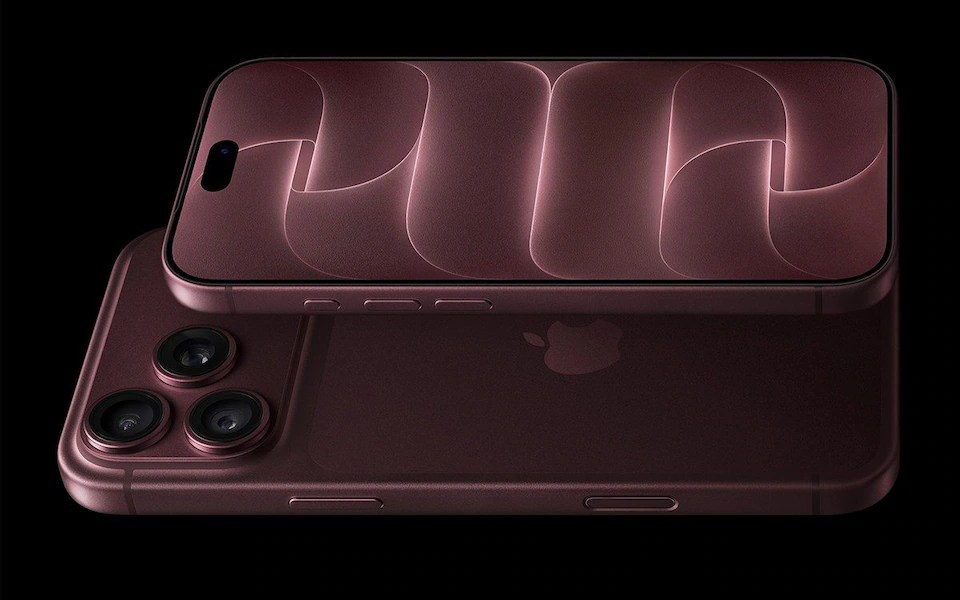
iPhone 18 Pro and Pro Max: Powered by the new 40% faster A20 Pro chip, these traditional flagships feature a smaller Dynamic Island, a new “variable aperture” main camera system for superior low-light shots, and massive battery leaps (up to 36 hours for the Pro and 45 hours for the Pro Max). The 18 Pro starts at £1,199, and the Pro Max starts at £1,299.
-
AirPods 5: Priced starting at £129 (and £149 with a wireless case), the new AirPods feature 50% better active noise cancellation, automatic mode adjustment, live translation and Apple Intelligence support. They launch on September 18.
-
Apple Watches: The Apple Watch Series 12 (starting at £399) and Apple Watch Ultra 4 (£799) introduce advanced heart-rate sensing every five seconds, a ‘Health Age’ vitality comparison feature and movement tracking for physical recovery. They also arrive on September 18. See below for full details.

What were the major updates to the new Apple Watch lineup?
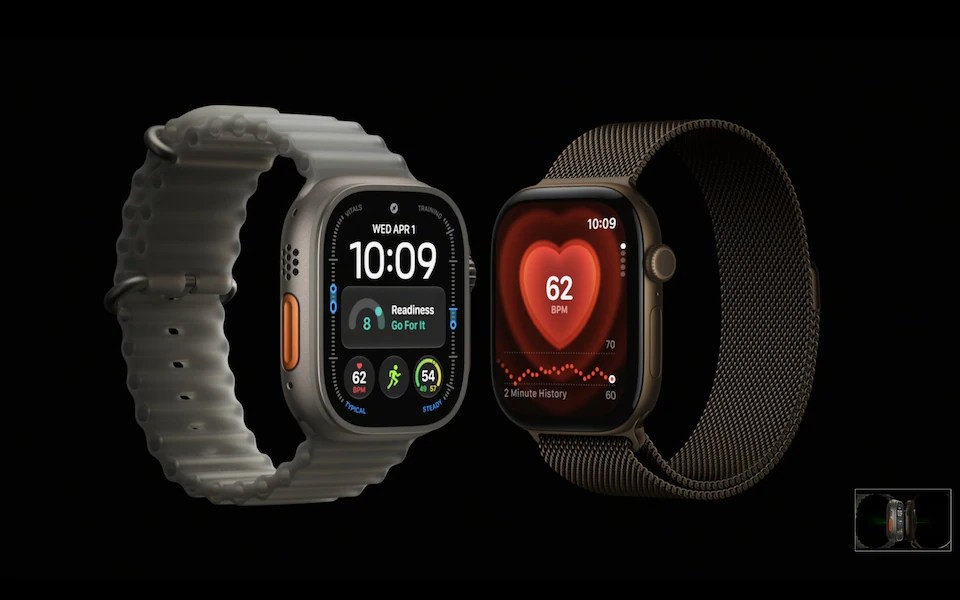
Apple introduced the Apple Watch Series 12 (starting at £399) and the rugged Apple Watch Ultra 4 (starting at £799), both launching on September 18. This generation brings massive upgrades centred around a completely re-architected Health Sensing System and the powerful new S11 chip:
-
Continuous High-Frequency Heart Monitoring: Thanks to larger, power-efficient green LEDs and rearranged photodiodes, the watches now measure your heart rate continuously every five seconds – 60 times more frequently than previous models.
-
Advanced HRV and Daytime Vitals: Heart rate variability (HRV) is sampled up to 24 times more often, split into separate “Recovery” and “Overall” metrics. A new daytime vitals view lets users track shifts in metrics throughout the day rather than just overnight.
-
Readiness Score: A new dedicated Readiness app helps athletes and everyday users balance strain by telling them explicitly when to push or when to rest.
-
Battery and Charging Boosts: The Apple Watch Ultra 4 bumps normal battery life up to 50 hours (and up to 84 hours in Low Power Mode), while the Series 12 introduces extended workout efficiencies and faster charging capabilities.
Discover more from Tech Digest
Subscribe to get the latest posts sent to your email.
